Field Notes No. 1 · Expedition No. 3
The Shaw Claw
A mother, a son, an ancient oak, and the pioneer who may never have left Eugene.
By the Mill Race Explorers Club Eugene, Oregon · 27 October 2026
There are probably more sensible ways to spend an October afternoon than wandering around the University of Oregon looking for a dead pioneer’s ghost. My mother and I decided not to pursue any of them.
Our subject was Hilyard Shaw, one of those people whose work is still part of Eugene even if his name has largely slipped out of everyday conversation. In 1851, Shaw and his helpers dug a channel connecting two sloughs, using hand tools and oxen to create the millrace that would power early local industry. That is a pretty substantial mark to leave on a town.
But we were following another thread: the old association between Shaw’s cabin and the Condon Oaks, the enormous trees that stood on what eventually became university grounds. Then we came across the detail that turned an ordinary historical walk into a proper expedition: accounts of Shaw declaring that he intended to haunt the Condon Oaks after his death. Not just some anonymous ghost attached to a picturesque old tree. The story was that the man himself had announced his plans. I wanted to know what sort of pioneer makes a posthumous appointment with a pair of oak trees. Naturally, we went to see for ourselves.
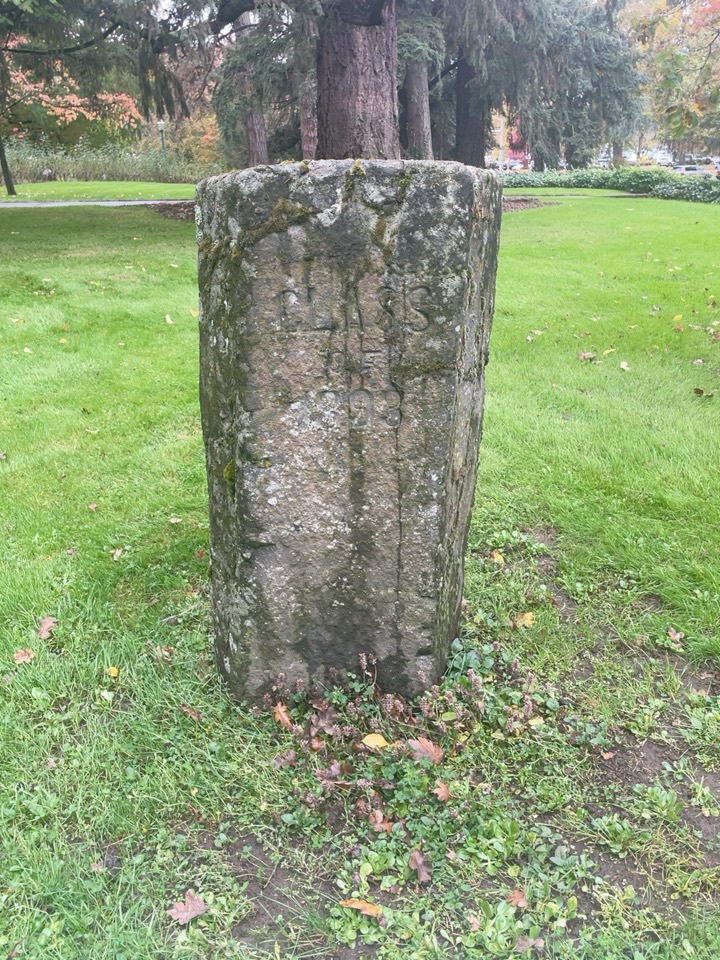
We started at Villard Hall and found a weather-beaten stone in the grass, its lettering half surrendered to moss and time. It turned out to be the Class of 1893 memorial, a basalt monument documented in university preservation records. The stone has a conspicuous seam running across it. Had it broken? Been repaired? Could the rock have come from some earlier structure? We entertained all the possibilities, including a very speculative connection to Shaw’s cabin, but found no evidence to make that last leap.
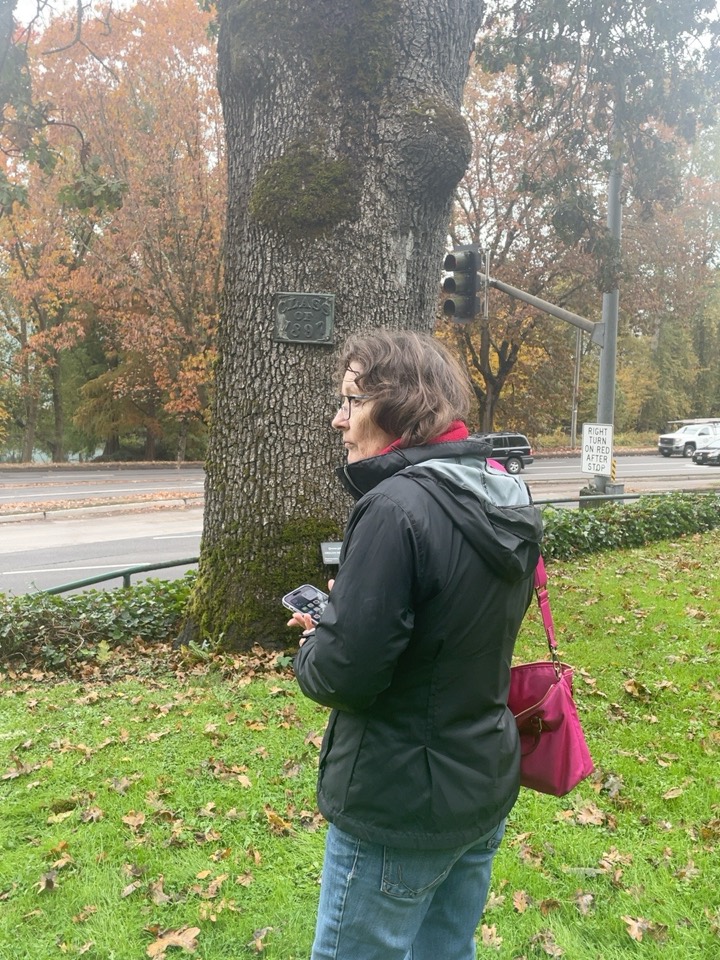
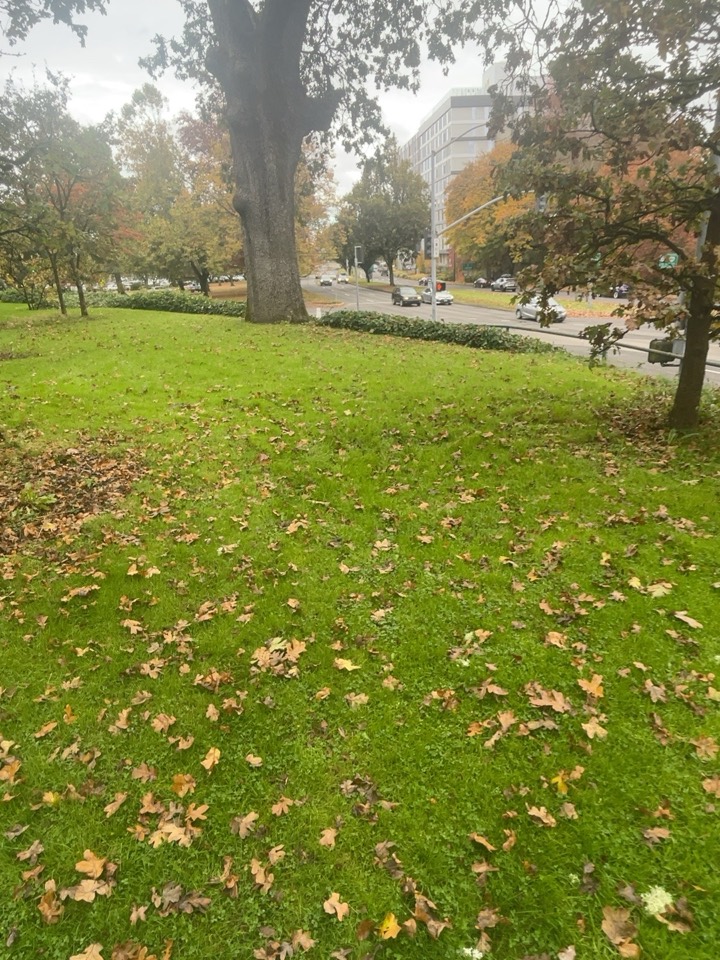
Then we found the oak Shaw was said to have promised to haunt. The metal plaque said Class of 1897, and the trunk was the sort of thing you want to stand beside for a while. It was there before the campus took shape. It was there when the neighborhood was something else entirely. My mother stood next to it while I photographed the bark and branches, and then we looked up.
That was when we saw it.
One enormous, contorted branch formation reached out from the tree like a clenched wooden hand. Not a subtle hand, either. A full-on horror-movie claw. The tree had spent a century and a half working on its special effects, and I felt obliged to give the result a name.
The Shaw Claw.
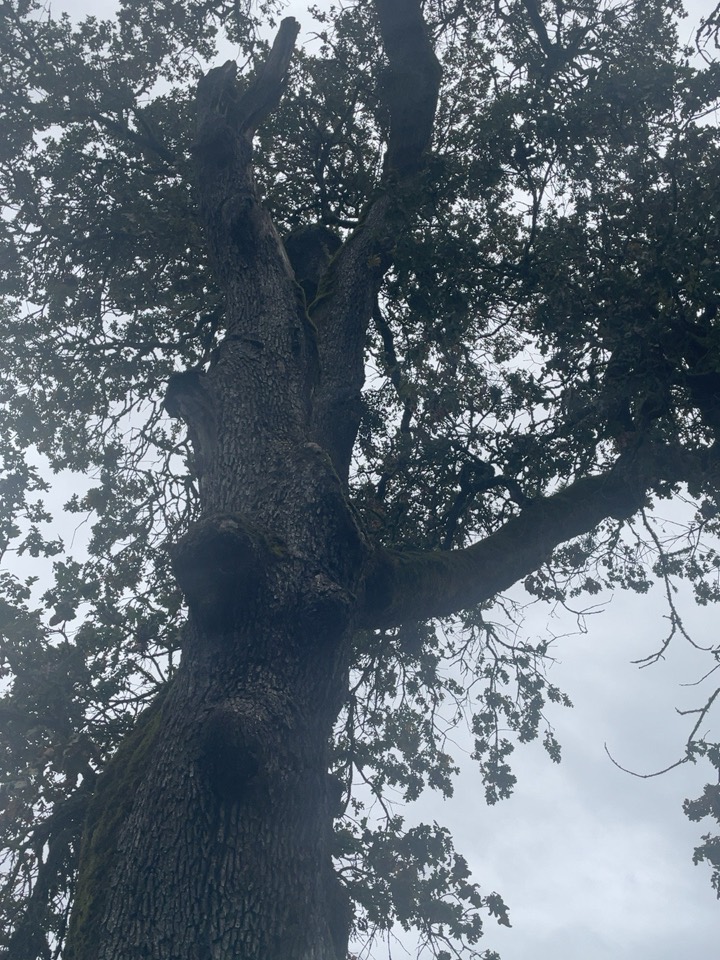
Now, is the Shaw Claw evidence that Hilyard Shaw made good on his reported promise to haunt an Oregon white oak? Of course not. Trees twist. Limbs break. Wood heals strangely. On the other hand, if you are going to investigate a nineteenth-century ghost story, and an ancient oak presents you with an enormous skeletal claw, it seems rude not to acknowledge the gesture.
We walked the surrounding lawn and noticed a shallow, rounded depression. A cabin footprint? A buried root system? A century of campus grading? We couldn’t tell, and a patch of uneven grass is not archaeology. We photographed it anyway. The best part of exploring history is learning to distinguish what you can see from what you would really, really like to be true.
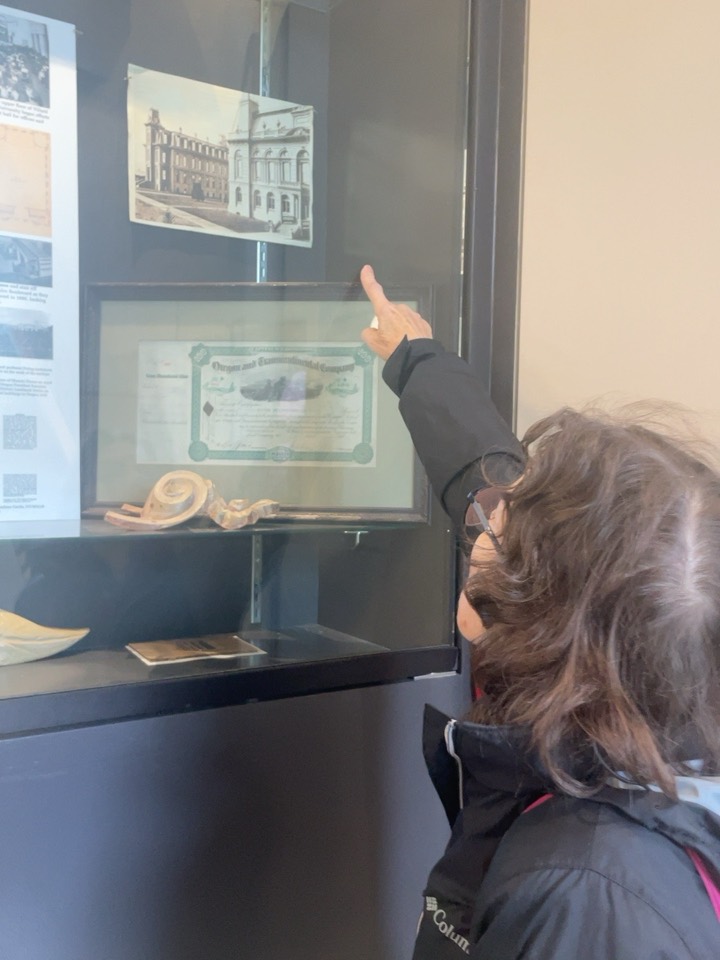
Inside Villard Hall, the historical display gave us another view of the landscape. Photographs from the 1890s showed the building and its grounds in a very different Eugene. My mother pointed out a large tree shape at the edge of one old image. Maybe one of the Condon Oaks, maybe not. We made a note to compare the angle another day. It was the sort of tiny detective work that can swallow an afternoon.
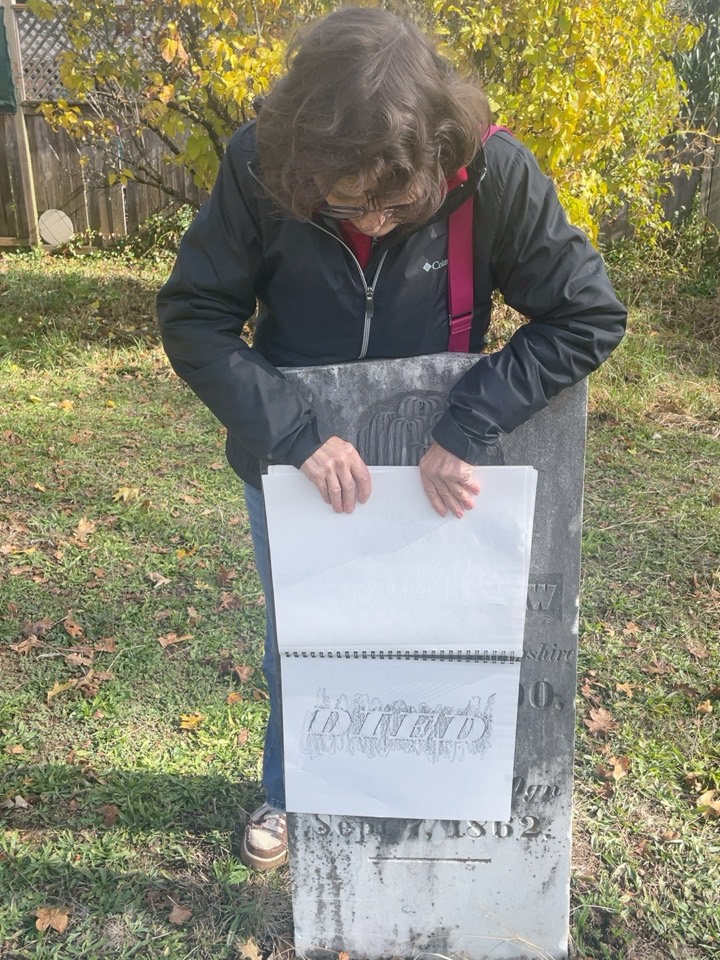
The day ended across town at Mulkey Cemetery. Shaw was not buried under the oak; that part of the mystery had already been settled. We went to the cemetery and found the stone associated with his grave. After spending hours with archival descriptions, plaques, tree bark and conjecture, it was strangely moving to stand in front of an actual nineteenth-century gravestone. My mother had paper and graphite with her, and we made a record of the visit. For any future visit, photography is the safer approach for a fragile old marker.
I don’t think we proved the existence of a ghost. We did find a pioneer’s work still threaded through the city, a surviving tree older than the university, a battered class monument, and a surprising amount of history sitting in plain sight. And I got to spend the afternoon wandering around Eugene with my mom, which was probably the best discovery of the lot.
As for Shaw: we know where his grave is. But if a piece of him still prefers the oak, I can’t say I blame him.
Long live the Shaw Claw.